

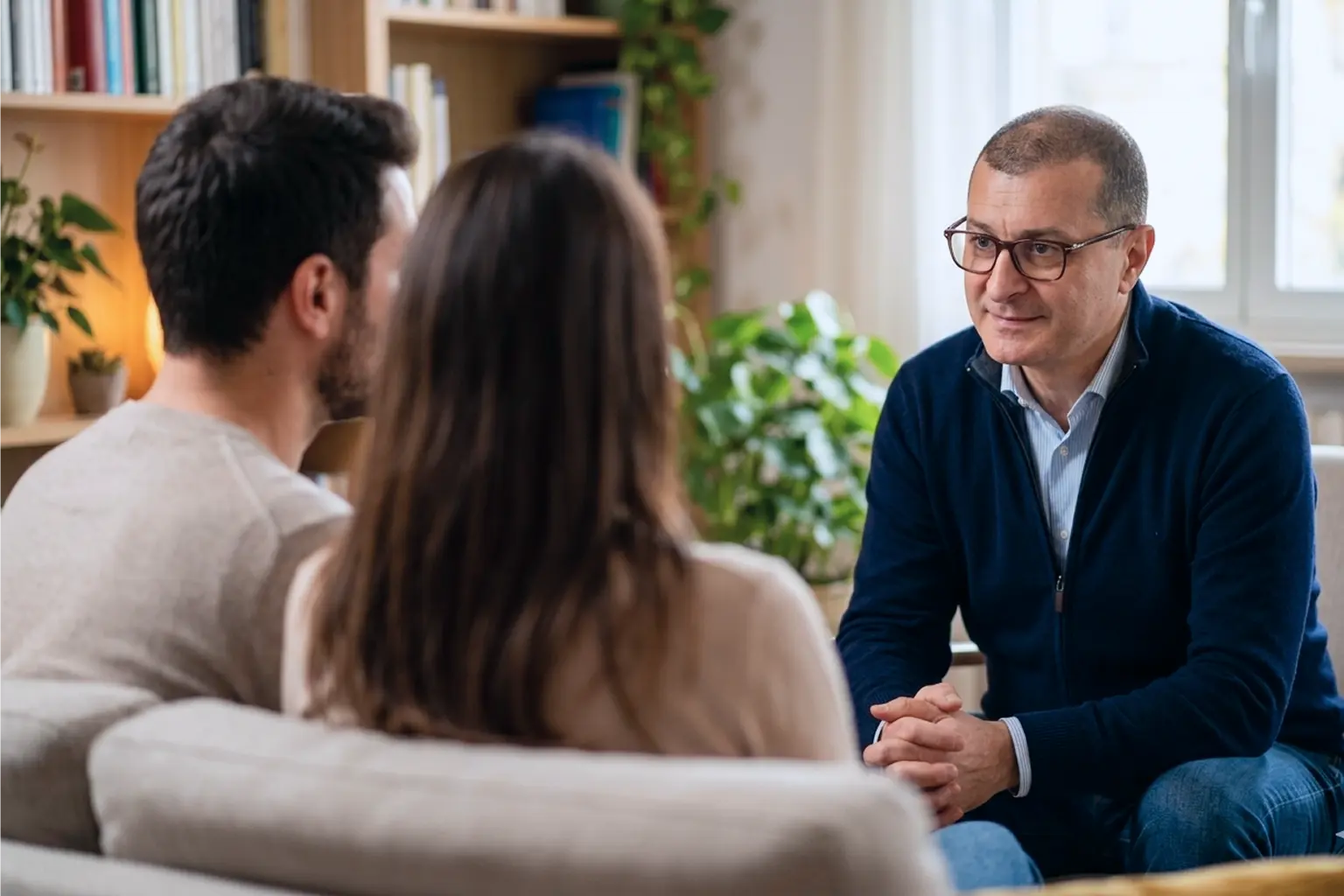
The discovery of an affair is one of the most shattering experiences a person can have within a relationship. In the hours and days that follow, the world that two people built together — the shared future, the sense of security, the belief in the person they thought they knew — can feel as though it has collapsed entirely. There is shock, grief, rage, and a particular kind of pain that has no precise name: the pain of having the past rewritten beneath your feet.
And yet. Across decades of clinical research and therapeutic practice, one finding has remained consistent: infidelity is not always the end of a relationship. For a significant number of couples who seek professional support after an affair, the process of working through betrayal becomes — unexpectedly, and not without considerable pain — one of the most profound experiences of growth their relationship has ever undergone.
This is not a comfortable or straightforward message. It is not an invitation to minimise what has happened, or to suggest that recovery is easy, or that it is the right path for every couple. What it is, is true. And at London Trusted Therapy on Harley Street, we have accompanied many couples through exactly this process — with honesty, clinical rigour, and deep respect for the complexity of what each person is navigating.
This article explores what happens psychologically after an affair, why trust is so hard to rebuild, what the research tells us about affair recovery, and how couples therapy in London can support both partners through one of the most difficult journeys a relationship can face.
Understanding the Impact of Infidelity: More Than a Betrayal of Fidelity
When people think about infidelity, they often focus on the sexual act itself. But the deeper wound is rarely about sex. It is about the shattering of the fundamental assumptions that underpin a committed relationship: the assumption that you are safe, that you are chosen, that your partner is who you believed them to be, and that the shared story of your life together is real.
Dr Shirley Glass, one of the foremost researchers on infidelity, described the impact of an affair as a form of trauma — specifically, a betrayal trauma that shares many of its features with post-traumatic stress. The person who has been betrayed may experience intrusive thoughts and images, hypervigilance, emotional numbness, sleep disturbance, and a profound loss of the sense of safety in their closest relationship. This is not an overreaction. It is a neurobiologically coherent response to having one of the most important sources of security in a person’s life suddenly become the source of the greatest threat.
For the partner who had the affair, the experience is also complex. Alongside guilt and remorse, there may be confusion about their own motivations, grief for what the affair represented, and an overwhelming sense of not knowing how to begin to make amends. There is often a mismatch in the pace and intensity of each partner’s emotional experience — and this mismatch is itself one of the things that makes the aftermath of infidelity so difficult to navigate without professional support.
Types of Infidelity: Why the Form It Takes Matters
Not all infidelity is the same, and in our clinical work at London Trusted Therapy, we find it important to understand the specific nature of what has happened — because the form infidelity takes shapes both the impact and the recovery process.
Physical Affairs
A sexual affair without significant emotional involvement can still be profoundly destabilising, but for many couples, the recovery trajectory is somewhat more navigable than where deep emotional entanglement is also present. The absence of emotional intimacy with the affair partner can, in some cases, make it easier for the betrayed partner to understand the affair as a symptom of something in the marriage, rather than as evidence that they have been replaced.
Emotional Affairs
An emotional affair — a deeply intimate connection with someone outside the relationship, which may or may not involve physical contact — is frequently experienced as more threatening than a purely sexual one. This is because emotional intimacy is often perceived as the most exclusive and meaningful form of connection. When a partner discovers that their spouse has been confiding in, relying upon, and prioritising someone else emotionally, the sense of displacement can be devastating.
Long-term Affairs and Double Lives
When an affair has continued for months or years, the betrayed partner must contend not only with the infidelity itself but with the magnitude of the deception involved. The sheer volume of lies — the altered alibis, the hidden phone activity, the false evenings away — can make it feel as though the entire shared history of the relationship is in question. Recovery in these cases typically requires more extensive therapeutic work, and honest acknowledgement of the scale of what has occurred.
Affairs Within Particular Contexts
Infidelity that occurs within specific circumstances — during a period of illness or new parenthood, with a close friend or family member of the betrayed partner, or within a same-sex relationship where social stigma may add additional layers of complexity — carries its own distinctive set of wounds. Sensitive, experienced couples therapy takes all of these contextual factors seriously.
Why Trust Is So Hard to Rebuild — And Why That Is Normal
One of the most distressing experiences reported by couples attempting to recover from infidelity is the recurring nature of doubt. The betrayed partner may genuinely want to move forward, may have intellectually decided to give the relationship another chance — and yet find themselves hijacked, weeks or months later, by a wave of rage, grief, or suspicion that feels as powerful as the day of discovery.
This is not a failure of will or commitment. It is the architecture of trauma. Traumatic experiences — and the discovery of infidelity is genuinely traumatic for many people — are processed differently by the brain than ordinary memories. They tend to remain vivid, intrusive, and emotionally charged in ways that more integrated memories do not. Anniversaries, seemingly random sensory details, a song, a restaurant, a phrase — any of these can trigger a sudden flooding of pain that the rational mind has long since tried to leave behind.
The partner who had the affair may interpret these waves as evidence that recovery is impossible, or that their partner has decided not to forgive them after all. The betrayed partner may fear that their inability to simply move on means they are not strong enough, or that the relationship is beyond repair. Both interpretations are usually wrong. What these experiences reflect is the normal, non-linear nature of trauma recovery — and they are precisely the kinds of experiences that couples therapy is designed to help both partners navigate together.
What Does Recovery from Infidelity Actually Involve?
Genuine recovery from an affair is not the same as forgetting, nor is it the same as simply agreeing to move forward. In our experience at London Trusted Therapy, lasting recovery involves several distinct but interconnected processes.
Full Disclosure and the End of Deception
Recovery cannot begin whilst deception continues. This sounds obvious, but it is not always straightforward. The partner who had the affair may be tempted to manage disclosure carefully — to share the minimum necessary, to protect their partner from details they believe will be too painful, or to protect themselves from the full weight of accountability. In our clinical experience, this is almost always counterproductive. Partial disclosure tends to prolong the agony of discovery and significantly undermines the rebuilding of trust. Couples therapy provides a contained, supported space for the full account to be given and received.
Understanding the Meaning of the Affair
One of the most important and often most difficult questions a couple must address is: what did the affair mean? This is not a question about blame. It is a question about context, vulnerability, and the state of the relationship — and sometimes the state of the individual — at the time the affair began. Affairs rarely occur in a vacuum. They tend to grow in the gaps: in loneliness, in unspoken dissatisfaction, in a gradual erosion of connection that neither partner has found a way to address.
Understanding the meaning of an affair does not excuse it. But it transforms it from an inexplicable act of cruelty into something that can be examined, made sense of, and — with commitment and skilled support — ultimately integrated into a revised and more honest understanding of the relationship.
Processing Grief on Both Sides
Both partners have something to grieve after an affair. The betrayed partner grieves the relationship they believed they had, the security they have lost, and perhaps aspects of their own self-image. The partner who had the affair may also experience grief — for the affair relationship itself (which may have met real, if inappropriately expressed, needs), for the version of themselves they were before discovery, and for the pain they have caused the person they love.
Couples therapy creates space for both of these grief processes to be witnessed and honoured — without collapsing them into a single narrative in which only one person is suffering.
Rebuilding a New Relationship
Perhaps the most important reframing we offer couples in affair recovery is this: the goal of therapy is not to return to the relationship as it was before the affair. The relationship as it was before the affair is what the affair grew out of. The goal is to build something new — more honest, more intentional, more explicitly tended — using the painful knowledge gained through the crisis as the raw material.
Many couples who have done this work describe their relationship post-therapy as more genuine and more intimate than it had been for years, sometimes than it had ever been. This is not a romantic fiction. It is a clinical reality, documented in the research and witnessed repeatedly in our consulting rooms on Harley Street.
How Couples Therapy Supports Affair Recovery: Our Approach
At London Trusted Therapy, our approach to couples therapy after infidelity is integrative, evidence-based, and sensitive to the particular complexity of betrayal trauma. We draw on several established frameworks, always adapting to the specific needs and circumstances of each couple.
Gottman Method: The Trust Revival Protocol
Dr John and Dr Julie Gottman developed a specific protocol for supporting couples in the aftermath of infidelity — a structured, research-based approach that guides couples through three stages: the atonement phase, in which the partner who had the affair takes full accountability and the betrayed partner’s pain is genuinely witnessed; the attunement phase, in which both partners begin to understand the relational context that made the affair possible; and the attachment phase, in which the couple begins to actively build new rituals of connection and trust. This protocol is clinically sophisticated and has strong evidence behind it, and it forms a significant part of how we work with couples after affairs at our Harley Street practice.
Emotionally Focused Therapy (EFT)
EFT is particularly well-suited to affair recovery because of its focus on attachment security and emotional responsiveness. In the wake of an affair, the fundamental attachment bond between partners has been severely disrupted. EFT helps both partners identify and articulate the deeper emotional experience beneath their surface behaviours — the terror, the shame, the grief, the longing — and to gradually re-establish the sense of being a safe haven for each other. The research on EFT outcomes in infidelity cases is consistently encouraging.
Trauma-Informed Approaches and EMDR
Where the betrayed partner is experiencing symptoms of genuine traumatic stress — intrusive memories, hypervigilance, emotional dysregulation, nightmares — it may be appropriate to address the trauma directly, either within the couples therapy framework or through individual trauma therapy running alongside it. At London Trusted Therapy, we offer Eye Movement Desensitisation and Reprocessing (EMDR), one of the most extensively researched trauma therapies available, for individuals working through the aftermath of betrayal trauma. The integration of trauma therapy and couples therapy, carefully coordinated, can be transformative in complex cases.
Existential and Meaning-Making Work
Affairs raise profound questions about identity, values, and the meaning of commitment. In our integrative, existential approach to couples therapy, we make space for these larger questions alongside the practical work of recovery. Who do you want to be in relationship? What does faithfulness mean to you, and why? What does this experience tell you about your needs, your vulnerabilities, your capacity for honesty? These are not abstract philosophical questions. They are the questions through which real and lasting change becomes possible.
Is Affair Recovery Right for Every Couple?
Honesty compels us to acknowledge that couples therapy after infidelity is not the right path for every couple — and that deciding whether to attempt recovery is itself a significant and deeply personal decision.
There are situations in which separation or divorce may be the healthiest outcome: where the affair is part of a broader pattern of abuse or coercive control; where one partner has no genuine desire to repair the relationship but is attending therapy to manage the other person’s response; where there has been repeated infidelity and no meaningful accountability; or where a partner simply, after honest reflection, knows that the relationship is over for them.
A good couples therapist will never push a couple towards a particular outcome. Our role is not to save relationships at any cost. It is to help both partners understand themselves and each other more clearly, to make choices that are genuinely theirs, and to ensure that whatever path is chosen — together or apart — is taken with clarity and self-knowledge rather than in the fog of crisis.
What we can say with confidence is this: the question of whether your relationship can survive and recover from an affair is one that deserves to be explored with proper support, rather than answered in the immediate aftermath of discovery, when both partners are in acute distress and the full picture is not yet visible.
When to Seek Couples Therapy After an Affair
There is no prescribed waiting period. Some couples seek therapy within days of discovery; others wait months, either because the immediate shock has made the idea of sitting with a therapist feel impossible, or because they hoped they could manage the recovery alone.
Both of these are understandable. But in our clinical experience, earlier support tends to be more effective. The longer the aftermath of an affair goes unprocessed, the more entrenched the patterns of pain, avoidance, and misunderstanding tend to become. Seeking help when the wound is still raw is not premature. It is wise.
Signs that couples therapy would be beneficial include:
- The discovery of an affair, at any stage — whether recent or some time ago
- Repeated cycles of apparent recovery followed by collapse back into crisis
- The betrayed partner experiencing symptoms of traumatic stress that are not diminishing
- The partner who had the affair feeling unable to give a full account, or genuinely unable to understand their own motivations
- Both partners wanting to repair the relationship but not knowing how to begin
- A sense that the same conversations are being had, with no forward movement
- One or both partners considering separation but not yet certain that it is the right decision
Why Choose London Trusted Therapy for Affair Recovery Counselling?
London Trusted Therapy is a specialist private therapy practice at Pinero House, 115A Harley Street, London W1. Our approach to couples therapy after infidelity combines clinical rigour with genuine human sensitivity. We understand that the people who come to us are not simply presenting a clinical problem — they are in the middle of one of the most painful experiences of their lives, and they deserve to be met with both competence and compassion.
Our therapists are BACP-accredited with extensive experience in relationship therapy, betrayal trauma, and affair recovery. We work integratively, drawing on Gottman methodology, Emotionally Focused Therapy, trauma-informed approaches, and existential-phenomenological frameworks, tailored to the specific needs of each couple.
We offer in-person sessions at our discreet Harley Street practice, with flexible appointments including evenings and weekends where possible. Online couples therapy is also available for those who prefer it or for whom attending in person is not always practical.
Everything discussed in our sessions is held in strict confidence. We understand the sensitivity of what you are bringing to therapy, and discretion is fundamental to everything we do.
A Final Word: Betrayal Is Not the Whole Story
An affair is a shattering event. It would be dishonest to suggest otherwise. But it is not, in every case, the final word on a relationship. For couples who are willing to undertake the work — with courage, with honesty, and with skilled professional support — it can become the point at which something genuinely new begins.
Not a return to what was. Something better. Something more real. A relationship built not on assumption and habit, but on deliberate, conscious choice — chosen again, with full knowledge of what has been risked and lost and found.
If you are navigating the aftermath of an affair and would like to explore whether couples therapy might help, we would be honoured to hear from you. The first step is simply a conversation.
Book a Couples Therapy Consultation
London Trusted Therapy | Pinero House, 115A Harley Street, London W1G 6AR
Discreet, expert, compassionate couples counselling in the heart of London.
