“The mind of man is naturally methodical, and delights in regularity and proportion; but the same mind has a natural taste for variety.” So wrote Dr Johnson, and in this apparent contradiction lies one of the central tensions of human existence. We crave both order and surprise, structure and freedom — a tension that finds its most profound resolution in the creative act. To understand creativity not as mere ornament to human experience, but as fundamental necessity, we must examine both its psychological foundations and its therapeutic possibilities with the same careful attention we might bring to parsing a metaphysical conceit.
The Imagination as Psychological Foundation
Carl Jung, that great cartographer of the unconscious, understood what the Romantic poets had intuited: that imagination is not fantasy’s frivolous cousin, but the faculty by which we apprehend truths too complex for reason alone. When Jung wrote of the creative individual as one who “carries and delivers the unconscious, psychic life of mankind,” he was articulating something that Coleridge had glimpsed in his distinction between fancy and imagination—between mere recombination of existing elements and that “esemplastic power” which shapes new wholes from the fragments of experience.
The process Jung termed individuation—the lifelong work of integrating conscious and unconscious elements of the psyche—bears striking resemblance to what happens in the making of a poem. Consider how Donne’s “The Canonization” transforms personal experience into universal truth through metaphor, or how Herbert’s “The Collar” enacts the very spiritual struggle it describes. The poet, like the individuating psyche, must hold contradictions in creative tension until they resolve into a new synthesis. This is not mere literary technique but psychological necessity—the fundamental work by which the self comes to know itself.
The Laingian Perspective: Creativity as Authentic Existence
Where Jung saw creativity as emerging from the dialogue between conscious and unconscious, R.D. Laing understood it as the expression of authentic being against the deadening conformities of social expectation. Laing’s vision shares something with Blake’s fierce insistence that “I must Create a System, or be enslav’d by another Man’s.” For Laing, the creative act was fundamentally subversive—a refusal to accept the false self that society would impose upon us.
This perspective illuminates why creative expression so often accompanies psychological breakdown and breakthrough. The individual in crisis, like Keats in his “negative capability,” must be willing to exist in “uncertainties, mysteries, doubts, without any irritable reaching after fact and reason.” The person undergoing what Laing called “ontological transformation” resembles nothing so much as the artist in the throes of composition—vulnerable, open to influence, balanced precariously between dissolution and creation.
Consider how this manifests in therapeutic contexts. The patient who begins to write poetry or paint during recovery is not simply finding a pleasant distraction, but engaging in what we might call, borrowing from Hopkins, the “inscape” of their own experience—that distinctive inner form which seeks expression. The creative act becomes a means of what Laing termed “re-membering” the self, putting back together what trauma or illness has scattered.
The Therapeutic Dimension: Creativity as Medicine for the Soul
The Greeks spoke of the Muses as daughters of Memory and Zeus—offspring of recollection and divine power. This genealogy suggests something profound about creativity’s therapeutic function. Creative expression allows us to transform memory—not to escape it, but to metabolize it, to discover in our wounds what Rilke called “the point of rupture” that becomes “the place where the light enters.”
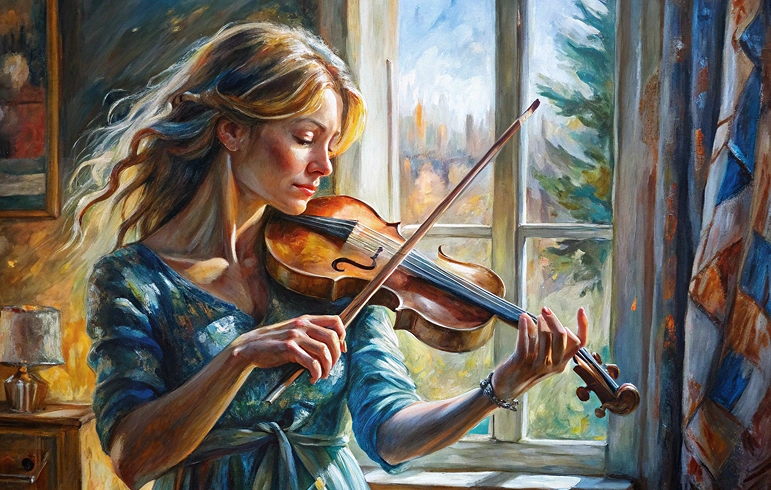
In clinical practice, we observe this transformation repeatedly. The trauma survivor who paints their nightmares discovers, like Lady Macbeth, that what cannot be washed away can sometimes be worked through. The depressed individual who writes morning pages engages in what amounts to a form of prayer—that daily practice of attention which the mystics knew to be transformative. The anxious person who takes up improvisational music learns what jazz musicians have always known: that beauty often emerges from our willingness to risk failure.
These are not merely metaphors but observations about the actual mechanics of healing. When we create, we engage what cognitive scientists call “flow states”—conditions of consciousness that mirror what contemplatives have described as mystical experience. In such states, the rigid boundaries of the ego become permeable, allowing for the kind of integration that Jung saw as the goal of individuation.
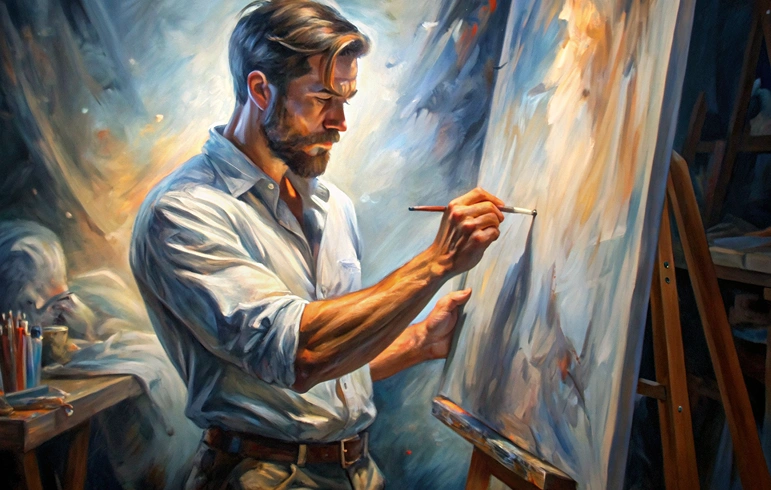
Daniel Siegel’s insights into interpersonal neurobiology illuminate this process from yet another angle. Siegel’s concept of “integration”—the linking of differentiated elements of experience—bears remarkable resemblance to what occurs in creative expression. When we engage in artistic practice, we activate what Siegel calls the “hub of the mind,” that integrative capacity which allows us to hold multiple perspectives simultaneously. The painter at her easel, like the patient in therapy, must learn to observe without immediately judging—to witness the emergence of form and meaning with what Siegel terms “mindsight.” This capacity for integration, Siegel argues, is fundamental not only to mental health but to the development of empathy and wisdom. The creative act becomes, in this light, a form of neural integration—literally rewiring the brain toward greater coherence and flexibility.
The Social Context: Creativity and Cultural Health
No consideration of creativity’s role in psychological wellbeing can ignore its social dimensions. As Matthew Arnold observed, culture is “the study and pursuit of perfection,” and perfection, for Arnold, was not static achievement but dynamic process—the ongoing effort to realize our full humanity. A culture that fails to foster creativity fails, in this sense, to foster full human development.
Laing’s radical insight was that much of what we label mental illness might better be understood as the psyche’s attempt to preserve its creative essence against dehumanizing social conditions. The “schizophrenic” break might represent, paradoxically, the mind’s effort toward health—its refusal to accept a false sanity built upon the suppression of authentic experience. This perspective, while requiring careful clinical discernment, points toward the need for what we might call “creative environments”—social spaces that honor rather than suppress the imagination.
Such environments are not mere luxury but necessity. Just as Wordsworth and Coleridge required the Lake District for their revolutionary poetic experiments, the developing psyche requires cultural space for creative exploration. Without this, we risk what T.S. Eliot diagnosed as the characteristic ailment of modernity: the “dissociation of sensibility” that fragments thought from feeling, intellect from imagination.
Practical Wisdom: Cultivating the Creative Life
If creativity is indeed essential to psychological health, then its cultivation becomes a moral imperative. This does not mean that everyone must become an artist in the professional sense, any more than the fact that everyone must think means everyone must become a philosopher. Rather, it means recognizing what Keats called “the holiness of the Heart’s affections”—the sacred quality of genuine creative engagement, however humble its expression.
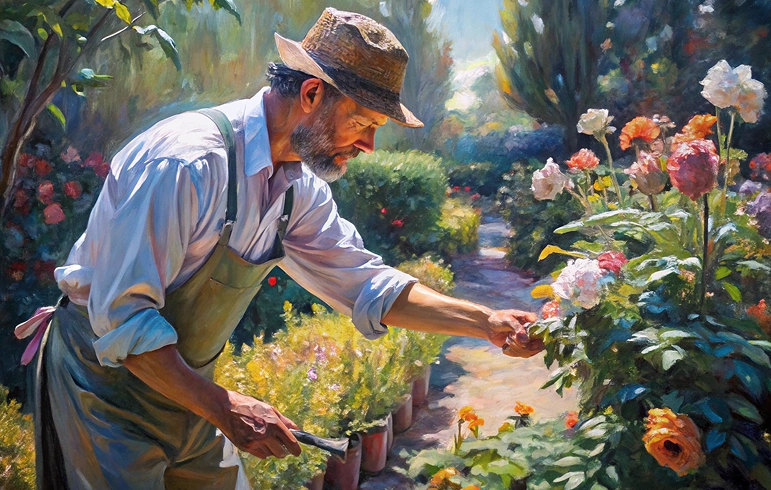
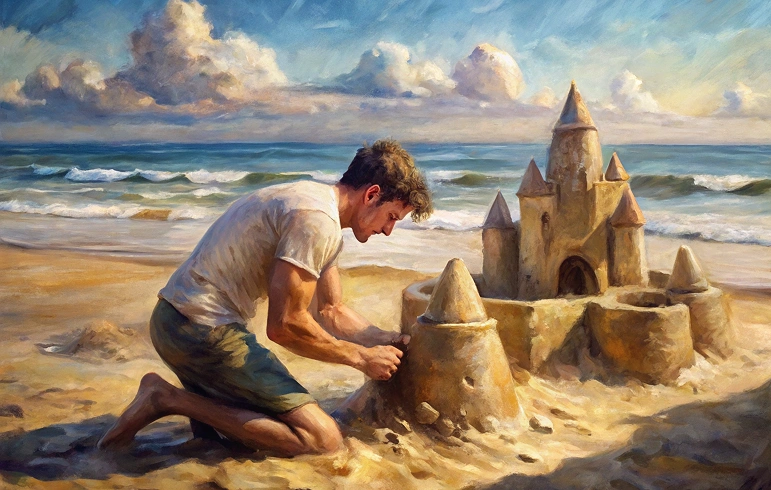
The individual in recovery who tends a garden engages in creative practice as surely as the poet crafting a sonnet. Both participate in what Gerard Manley Hopkins called “the world’s instress”—that inward energy which seeks outward expression. The difference lies not in the medium but in the quality of attention brought to the work.
This quality of attention—what we might call, following Simone Weil, “the soul’s orientation toward beauty”—can be cultivated through practice. Like the close reading of poetry, it requires patience, openness, and willingness to be surprised by meaning. The therapeutic value of creative practice lies partly in this cultivation of attention, this education of the soul in modes of perception that honor both precision and mystery.
Toward a Creative Understanding of Health
What emerges from this consideration is a vision of mental health that transcends the merely clinical. Health, in this view, is not simply the absence of symptoms but the presence of what we might call “creative vitality”—the capacity to engage with experience in ways that honor both its given structures and its infinite possibilities for transformation.
This understanding has implications for how we structure our institutions and our daily lives. It suggests the need for what Matthew Arnold might have called “creative criticism”—forms of cultural engagement that foster rather than diminish our capacity for imaginative response. It points toward educational practices that honour the whole person, therapeutic approaches that engage the creative as well as the cognitive dimensions of experience, and social arrangements that provide what every creative soul requires: time, space, and the freedom to fail.
In this light, the cultivation of creativity becomes not self-indulgence but social responsibility. As Eliot observed in “Little Gidding,” “We shall not cease from exploration,” and the exploration he had in mind was not merely geographical but psychological—the ongoing journey toward what he called “the intersection of the timeless with time.” Every genuine creative act participates in this exploration, contributing to what Jung called the “collective work of culture”—humanity’s ongoing effort to understand and express its own deepest nature.
The person who paints, writes, sings, or gardens with genuine attention becomes, in however small a way, a participant in this great work. Their healing becomes not merely personal recovery but cultural contribution—a reminder that the human spirit, properly tended, remains capable of creating beauty from brokenness, meaning from confusion, hope from despair. In fostering creativity, we foster not only individual wellbeing but the health of civilization itself.
To further explore how artistic expression reshapes our neural pathways and supports recovery, I invite you to watch our detailed guide on the neurobiology of expression. In the video “Why Your Brain Needs Creativity to Heal?”, we delve deeper into the science behind these concepts and offer practical insights into integrating creative practices into your daily wellness routine.